
How to Gracefully Grow Out a Pixie Cut
If you’ve seen my array of 2013 hair styles, you’ll know that I favor short hair. However, I’m in the process of growing my hair out. No, me cutting my hair short for several years was not a political statement. I think it’s crazy to say that everyone with short hair is making a political statement. Nor is growing my hair out a statement, either. It’s merely me growing my hair out to please me.
How to Gracefully Grow Out a Pixie Cut
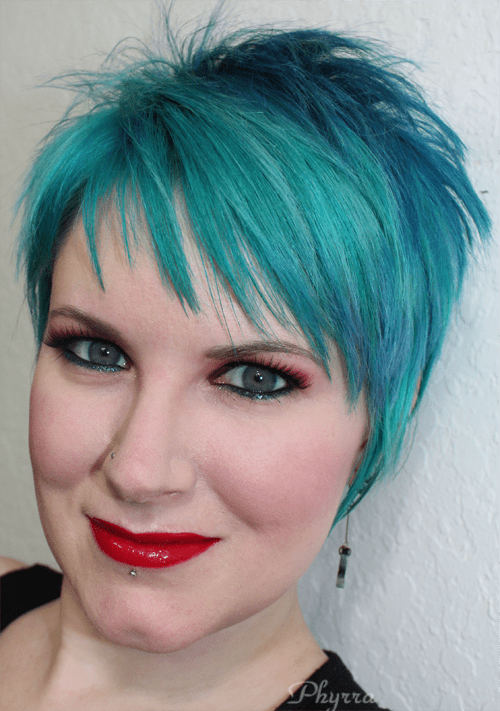
So today I’ve got tips on how to gracefully grow out a pixie cut. Pixie cuts may be the trend, but it’s a rather drastic cut and it’s not for everyone. If you’ve already gotten tired of the super short locks, I’ve got suggestions on how to handle the transitions.

Work With Your Hair
Growing out a pixie cut often leads to damaged hair as you try to tame the varying lengths with heat styling. Embrace the varying lengths with a tousled style. Use a hair styling powder like Rock Your Hair Bombshell Powder to add volume and work with the shattered style, rather than the flat iron. This is my favorite way to embrace the messy look.
Take it easy on heat styling and only use light-weight products so that your hair doesn’t dry out. Using a heat protectant before you flat iron or blow dry is a must! My favorite is the DermOrganic Spray Therapy. Deep conditioning treatments are critical! Of course I think Pretty Little Elixir Vegan Hair Masque is perfect to deeply moisturize your hair without weighing it down.

Trimming Is Your Secret Weapon
Trimming your hair actually helps it stay healthy by eliminating split ends. If you skip getting trims, you may end up with unsightly split ends that will make it take longer for your hair to grow out. Getting a tiny trim every four to six weeks will help your pixie cut turn longer in no time. It also helps your hair reach a more even length to avoid excess flyaways and frizz. If your stylist suggests it, you can just go in for a bang (fringe) trim, if you don’t feel you need an all over trim.
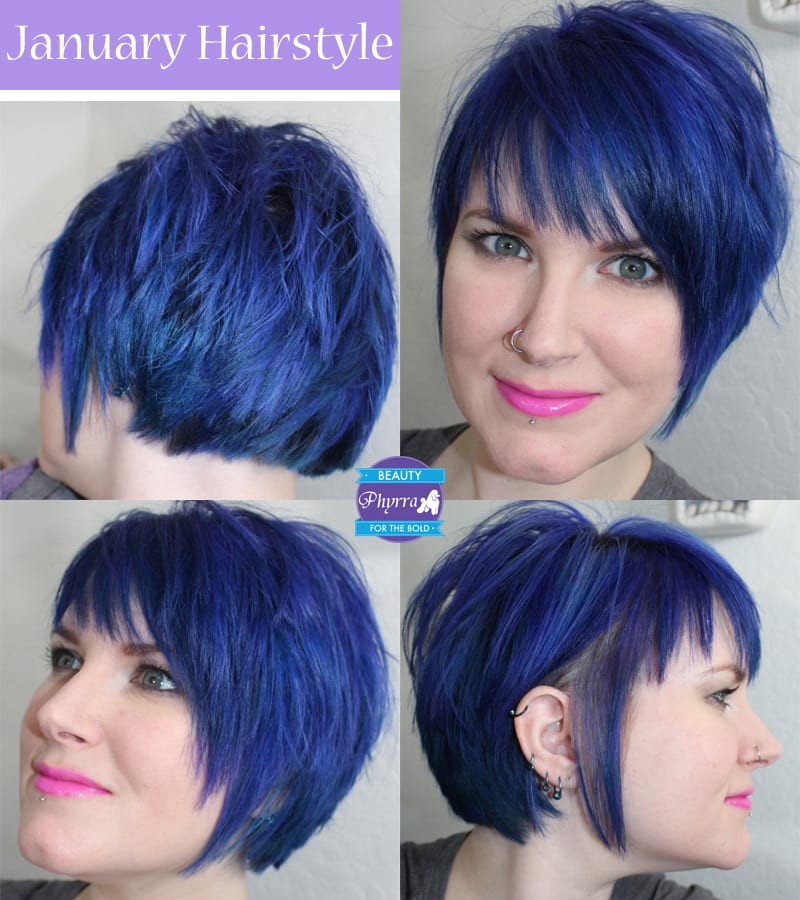
While I recently had an all over trim, my next few cuts will probably just be to get my bangs trimmed. For mine, I focused on getting rid of the back to try and bring my hair closer to being the same length all over. I want to avoid having a mullet! However, as you can tell, I still have lots of layers in there to grow out.
Add Supplements To Your Diet
Even with a proper diet, your hair may still need additional supplements to help it grow quickly. I’m currently taking Biotin. Biotin supplements aid in the production of keratin with helps hair retain moisture and it thickens and strengthens strands. Vitamins B, C and D are also important as they help both hair and scalp health. Supplements with amino acids are ideal as these are crucial for the protein production your hair needs.
Many hair supplements include all of these and prevents you from having to take so many different things. If you take a multi-vitamin, you may not need the extra B, C and D vitamins. Too much of these can result in poor health, including problems growing out your hair. Since I take a multivitamin, I’m sticking to the multivitamin and biotin.
The side effect of biotin is that it’s also helping to strengthen my nails. However, I’m also trying to find a salon in Tampa that will do the IBX treatments on my nails, too, like Spa Touch did in Orlando. I want stronger nails with my longer hair 😛

Hair Accessories
Styling a growing pixie cut is just as important as knowing how to grow out a pixie haircut. While you can certainly use a headband, which is what I’ve been doing a lot recently, there are many other options! You can use a wig. You can also rely on barrettes, flowers, pins and volumizing hair powder. You can still create fun, stylish looks throughout all the stages of your pixie cut regrowth.

Right now I’m loving all the unique and beautiful creations by Bunny Page on Etsy. You can get custom headbands, hair pins, and flowers. They even have stunning gorgeous necklaces, too! I’ll be reviewing them soon. I also adore Love.Like.Style.

Extensions
You can have hair extensions put in. I had extensions put in back in 2011 when I wanted to grow out my asymmetrical cut. On the left side of the picture you can see that we matched my hair to darkest auburn and black. to create the illusion of longer, fuller hair on the left side of the picture we used 10 black and 10 darkest auburn extensions. For the right side of the picture I just wanted to add a splash of color so we used 10 purple and 2 hot pink. The process took about 2 hours. It was $330 for the extensions, the installation, the special comb and the cut/style. Getting adjustments usually costs about $25, but you can maintain them for several months.
Hair Falls
For the best hair falls – clip ins, full head or accents – I recommend checking out I Kick Shins. I’m not affiliated with them in any way but I’ve bought lots of clip in extensions and hair falls from them over the years and they’re absolutely awesome. Yes, you can buy a full set of clips to add length all over.
Messy up-dos are ideal for pixie cuts. Odds are, you’ll be dealing with varying lengths. Use jeweled clips or hair pins to pin back random sections of hair. You’ll create a fun, artfully messy do.
If you’d rather go for a more natural look, use something like DermOrganic Volume Foam at the roots when you blow dry to make your hair look fuller. They’ll help smooth flyaways and leave you with an almost bob look as your hair grows out.
Once you reach the point where you can take advantage of braids, go braid crazy. Braids are highly customizable and are perfect for work, school, a night out and even just relaxing at home. For the best braids, check out Hair Romance. My friend Christina has so many amazing hair tutorials, tips and tricks!
Looking for more? Check out
- 10 Organization Hacks for Beauty Lovers
- Best Mascaras + Mascara Hacks & Tips
- The Easy Way to go Cruelty Free
- The Pale Girl’s Guide to Highlighting and Contouring
What are your tips for How to Gracefully Grow Out a Pixie Cut? Please share them below!

I could have used this two years ago! Thankfully my sister is a hairstylist, but I was clueless. I just surrendered my ‘do to her and let her do all the work.
All those hair styles look super cute! I can’t do a pixie cut, my hair curls up and I look crazy! You look cute though. Thanks for linking up to Snickerdoodle Sunday.
No Lie, I’ve always wanted to rock a Pixie cut, but I have a round face so I don’t think it would be complimentary to my face shape.
Ginnifer Goodwin has a rounder face and rocks short hair, I think 🙂
She has a round a face, but isn’t overweight so that’s why she can pull it off IMO.
She does have a defined jaw and cheekbones. I don’t care what other people look like, but I’m self conscious about my fat face, which is one reason I have longer hair.
i have a round face did it and everyone says i look good with it just try it remember hair grows out
You seem to be able to wear pretty much any style so well!! I’ve been cutting and growing my hair for 20 years now and accessories are definitely major players in a successful grow-out. Regular trims help too. And patience but sadly that can’t be purchased.
I had no patience with my hair today, so it was wig and accessory time 🙂
I wish I was like you and could experiment with different hair trends, but I’m afraid.
Get clip in hair. That lets you experiment without commitment 🙂
I love how you’re so fearless with your hair.
Thanks! It makes me happy 🙂
I am always inspired by your hair looks. A pixie is fantastic on you! Looking forward to what’s next!
Hopefully you’ll love the longer locks too.
I’ve gone through that process too– As soon as my hair was long enough I threw my hair into pigtails. Oy vey!
Braids and pigtails are fun!
I once had a stylist cut my curly, thick hair into a bob.. and it was awful. I relied heavily on headbands and barrettes for a while! Unfortunately, it was in the 80s when I didn’t have many options for products. You have lots of great ideas I wish I had access to then! 🙂
I hope you can use some of them now 🙂
It took me FOREVER to grow out my hair after my “Victoria Beckham” phase.
I think between vitamins and biotin it will go smoothly.
Your hair always looks great, so I take anything hair related you say seriously! Great tips! I’m a short hair gal too. My hair is just too thick and heavy to look good long haha.
Aww thanks Amber!
Your hair is looking really nice as it’s growing out. How long do you think you’ll go?
At least to my shoulders
Awesome Tips. You Seriously have the coolest hair styles. I cut my hair super short in 2008… to my ears… it grew out fast… but I felt so weird without it. lol It was also difficult to wear short for me because my hair is naturally curly – I had to flat iron it daily.
That would drive me crazy! My hair is so straight though, sometimes I wish for natural curl.
GREAT tips!!! I wish I could rock the short hair like that.
Get a wig to play with it 🙂
You look fab with a pixie and with longer hair! You go girl!
Thanks Noelle!
I LOVE how you can rock a pixie cut!
Aww thank you <3
One of the reasons I wanted to work with you in the first place on the hair masque (besides the fact that you’re super awesome!) is that your hair always looks shiny, thick, and amazing, despite the fact that you color it all the time. I wanted to learn the ingredients you use and combine them with what I knew from cosmetic science…and it appears to be working! Woohoo!
I considered getting a pixie cut once; this post makes me more likely to consider it again, because it makes it seem less like a forever commitment. Kudos!
Thanks Nicki! Yeah, as long as you’re mentally prepared with what you look like with short hair, and you’re comfortable with the in between phases, you’ll do ok. Plus, I can help you 🙂
When I was in 7th grade I got an unintended pixie cut, and I was horrified. This was in 1997 when short hair was only really seen on much older women. Little did I know that I wouldn’t try to grow my hair out until 2002. I kept it very short, barely an inch in length and often spiked it. I had heavy highlights that looked like leopard print, it was awesome. When I started growing it out I would trim the back myself along my neck, not touching layers. I was kind of a tomboy so I kept it standing up in spikes of all sorts until they wouldn’t stand up as easily. By that point it had become a chin length bob and I had also been victim to my sisters cosmetology class practice.
Outside of that, I did have it short again when I donated it in 2008. I would sweep it back out of my face with gel when it became unmanageable. Now it’s past my shoulder blades 🙂
I always like your hair, it’s fun!
My firs short hair experience was like… 1995 or 1994 when I cut off my waist length hair into an extreme A line bob. i love hearing about your hair! I would love to have seen the leopard print.
My best tip is: Patience! Lots and lots of patience! Growing hair isn’t a sprint, it’s a marathon. 😀
Yep, Patience is definitely needed.
I love the pixie style in the third photo down. I like your January style too 🙂 I have never been brave enough to cut my hair shorter than my shoulders so I have never had to go through growing it out but these tips are great for those who are.
Yeah the wavy pixy is super cute!
I think your January hair looks fab, when I go short that’s similar to what I do. I have been growing my hair out for the first time in years, and I’m enjoying it! Usually I grow my hair out and then get it chopped in the Feb/March timeframe – every year! These are great tips and options for enjoying that grow out phase 🙂
You’re welcome! I’m glad you find them helpful 🙂
Growing out any short haircut is a long and challenging process, good to know there are tips on how to make it more graceful. This is a very informative post!
It really is! It’s easy to get frustrated and cut it all off again.
I changed the way that I eat and my hair and nails have been growing so fast. I no longer eat any food that I can’t pronounce or recognize as food in an ingredients list, such as citric acid, lactic acid, anything that does not read like a real food ingredient. I have eaten this way for over a year now and it still amazes my hair stylist how fast my hair grows. My nails are strong and long, but not in a stiff brittle way. They are sort of flexible but they don’t peel or break. I change my nail polish often and it has no effect on their strength. It has helped my skin be visibly brighter and I no longer get acne. I only get acne if I am having a reaction to a new product.
Citric acid is a natural preservative, if I recall correctly.
Citric acid is a preservative and it’s not bad for you. It’s found in citrus fruits. Lactic acid comes from mostly protein- and lactose-based sources. Both are fine to ingest and are actually good for your hair and skin; I have numerous products that contain both of these ingredients, particularly citric acid (it’s found in a lot of vegan products). They sound scary but it’s really nothing to worry about- a lot of these long, awful-sounding chemical names are just science-y names for everyday things.
Citric acid is made by fermenting corn for industrial use. It is far to expensive to use citric fruits for the demand of citric acid needed so companies don’t use real citrus anymore. Smaller more health conscious companies may use real citrus, or a combination of fermentation and citrus, but it is something that you would have to find out from each company. My skin, hair and nails have improved tremendously since cutting these chemically processed foods out. Every time I do eat these ingredients, my skin behaves poorly and breaks out in eczema and deep cystic acne. My skin behaves beautifully without them. I am personally just more sensitive to these chemical ingredients. The only way to know if your body works better without these ingredients in it is to eliminate them from your diet for a period of time and see if your health or emotional wellbeing improves. Every body is different 😀 My schizophrenia has greatly improved as well. I have found personally in my travels in the natural world, that naturally derived isn’t always natural enough for my body. I do have sensitivities to yeast and molds, and many of the long worded ingredients are made by introducing natural bacteria strains to natural foods, creating another natural product. I am so happy that I tried this elimination test at the suggestion of a friend; I noticed results in my skin and emotional wellbeing in the first two weeks. I also notice that I don’t get the “water” weight that comes with menstrual cycle anymore. Every body is different and I hope that my experiences have been an interesting read! 😀
I’ve heard that elimination diets are the best way to figure out food allergies / sensitivities but they’re definitely not fun to do 🙁